Meet the 2026 Student Design Challenge Winners & Finalists
RESNA was proud to host two members from each of the six finalist teams at RESNA 2026 during New York Metro Abilities International. Congratulations to our winners! Each winning team will receive a monetary prize in addition to a complimentary RESNA student membership.
During the judging session, finalist teams pitched their innovative projects to an esteemed panel of assistive technology professionals, with winners announced at the Student Design Challenge Showcase. The finalists then had the opportunity to present their projects to all Abilities International attendees at the showcase.
While at the conference, students participated in continuing education sessions, networked with industry professionals, and explored the latest in rehabilitation and assistive technology on the Expo floor.
Congratulations to all of our Student Design Challenge winners—we celebrate your creativity, hard work, and impact on the future of assistive technology!
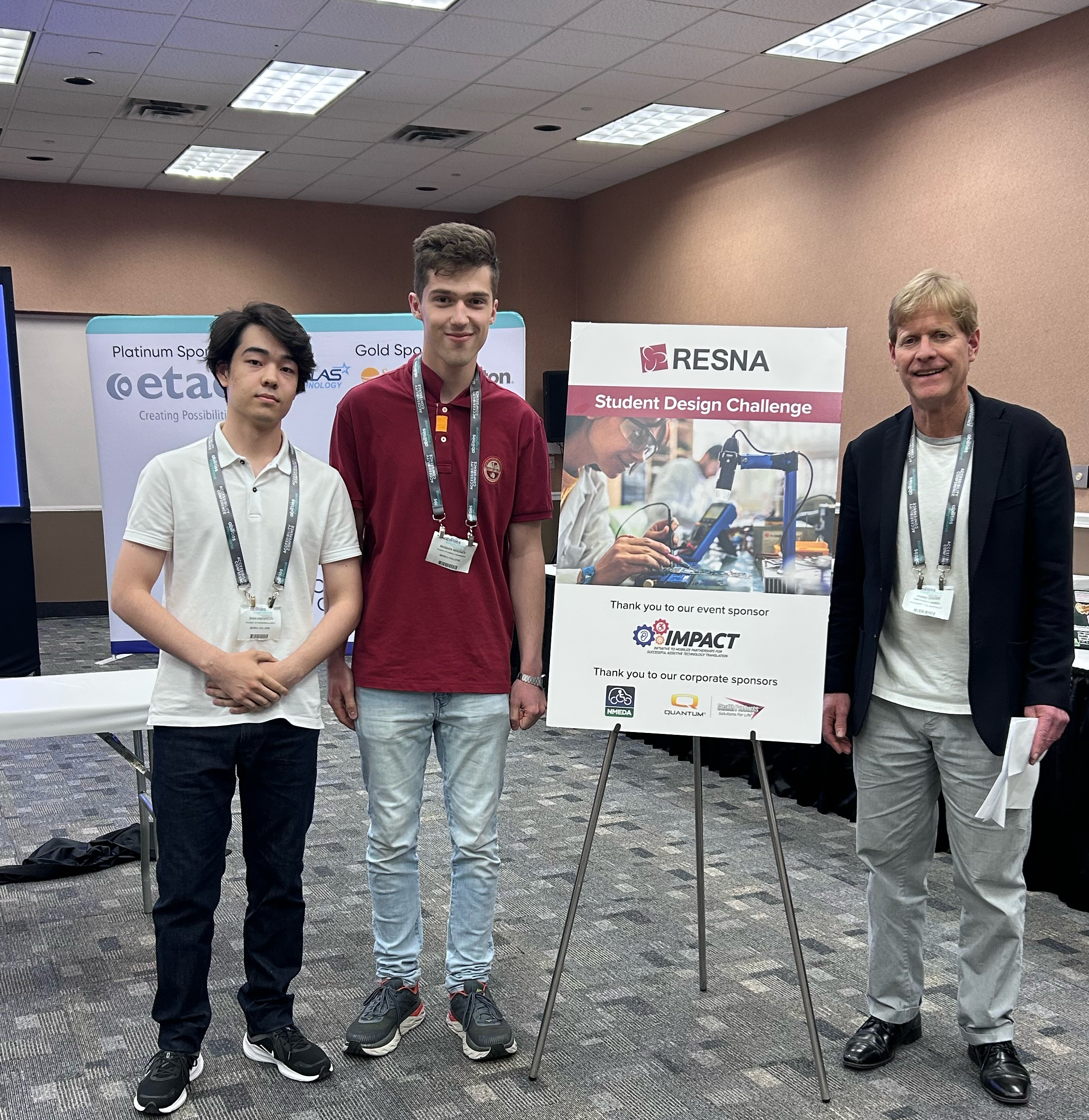
1st Place Winner: Kozha: Real-time text-to-sign-language translation for inclusive classrooms
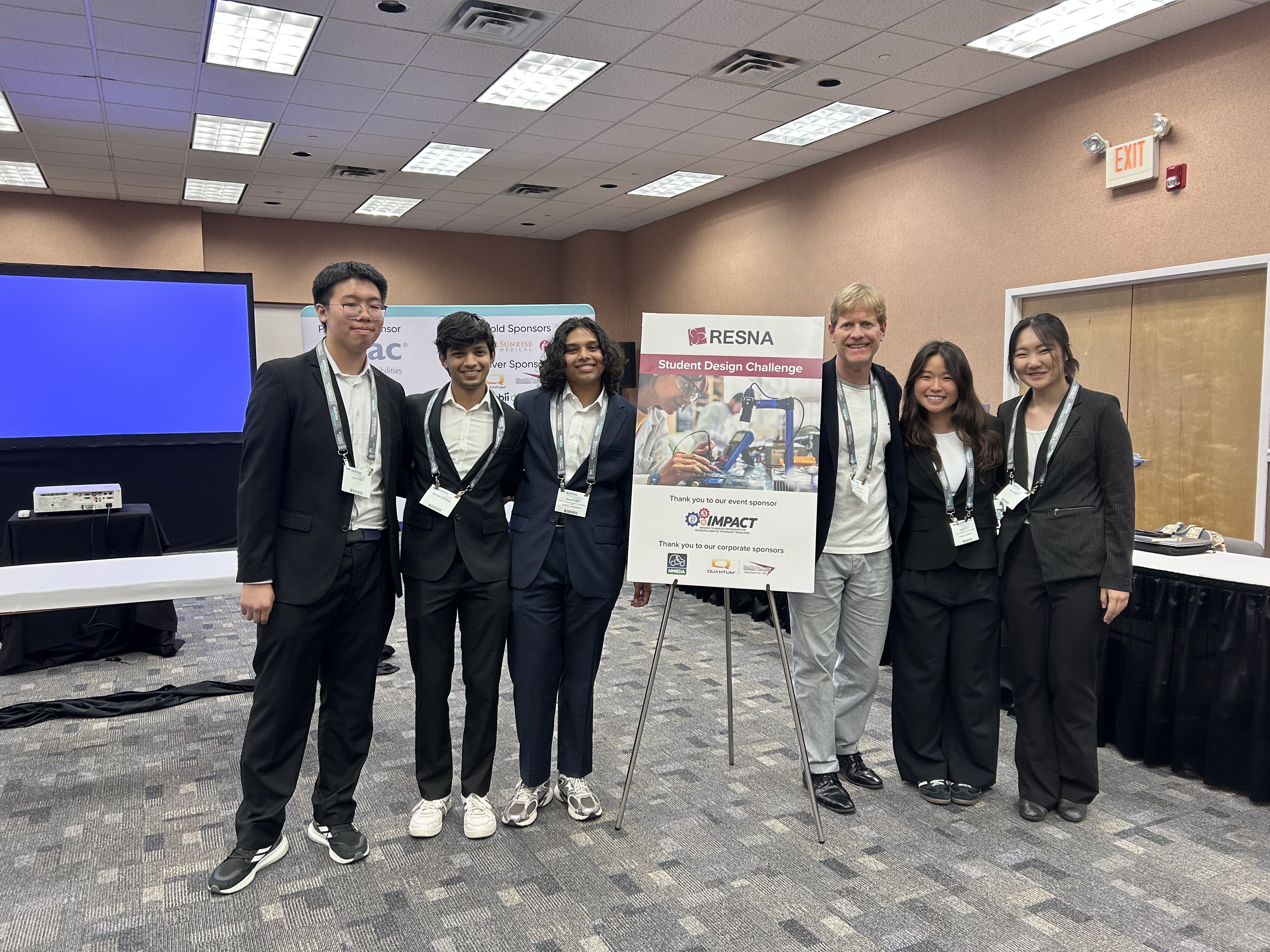
2nd Place Winner: Tactile Coding Blocks: A tactile tool to help visually-impaired students learn computer science.
3rd Place Winner: Nav-Cap: An assistive system that promotes independence for swimmers with visual impairments.
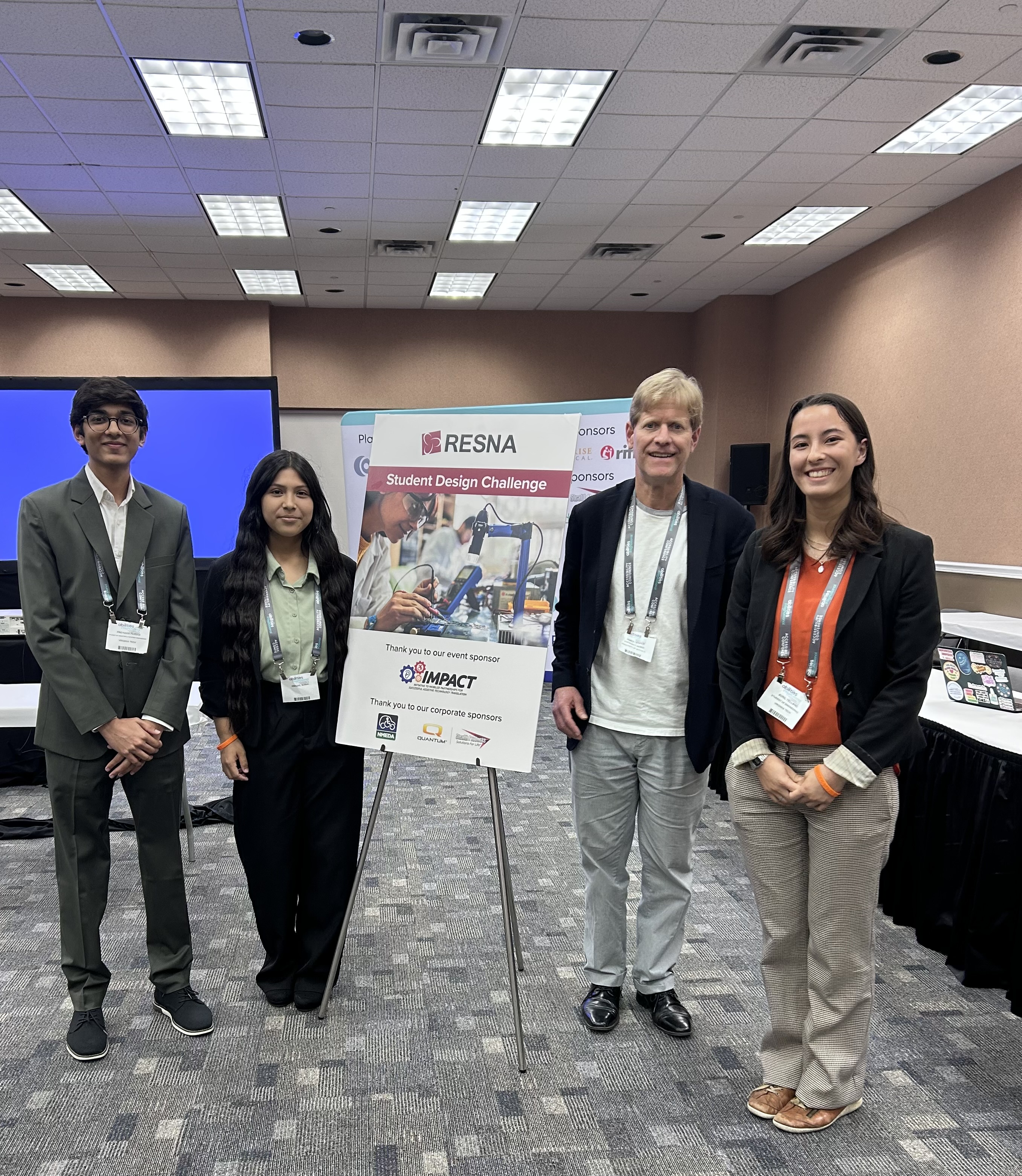
A big thank you to the IMPACT Center at the University of Pittsburgh for sponsoring this year’s showcase! We’re excited to announce that FrontRow: real-time note-taking platform that provides an equal access to learning for all students from University of Texas at Austin has been awarded the IMPACT Award.
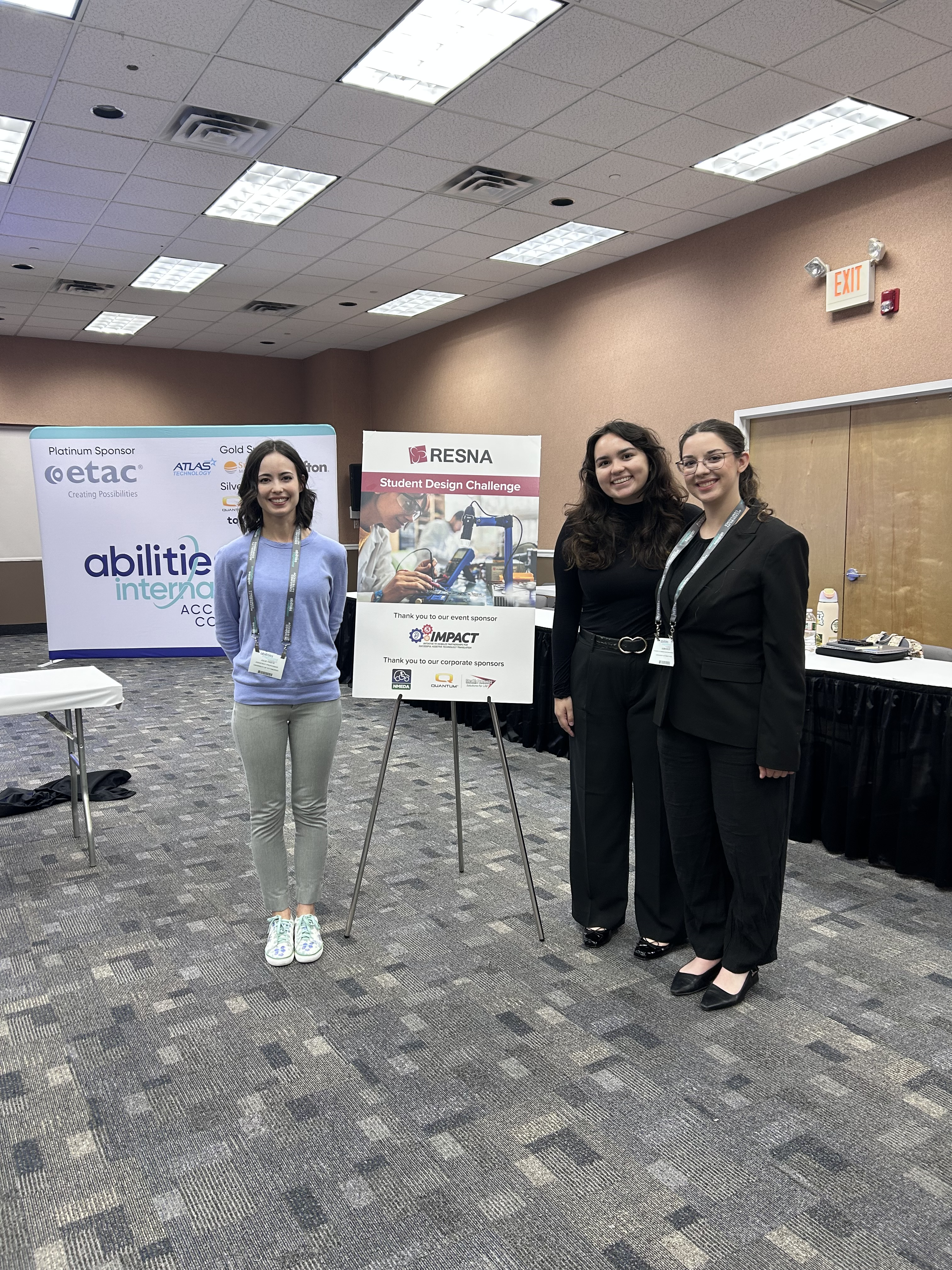
The AT IMPACT Award celebrates visionary innovators whose groundbreaking product or service shows great promise in unlocking human potential, enabling individuals to soar beyond the limitations of assistive technology and enhance their independence and well-being. It honors those who redefine what’s possible, merging innovation with compassion to create a more inclusive and limitless future.
Congratulations to the winners and all who participated!
The ClipBuddy: Empowering one-handed styling with dignity, creativity, and choice.
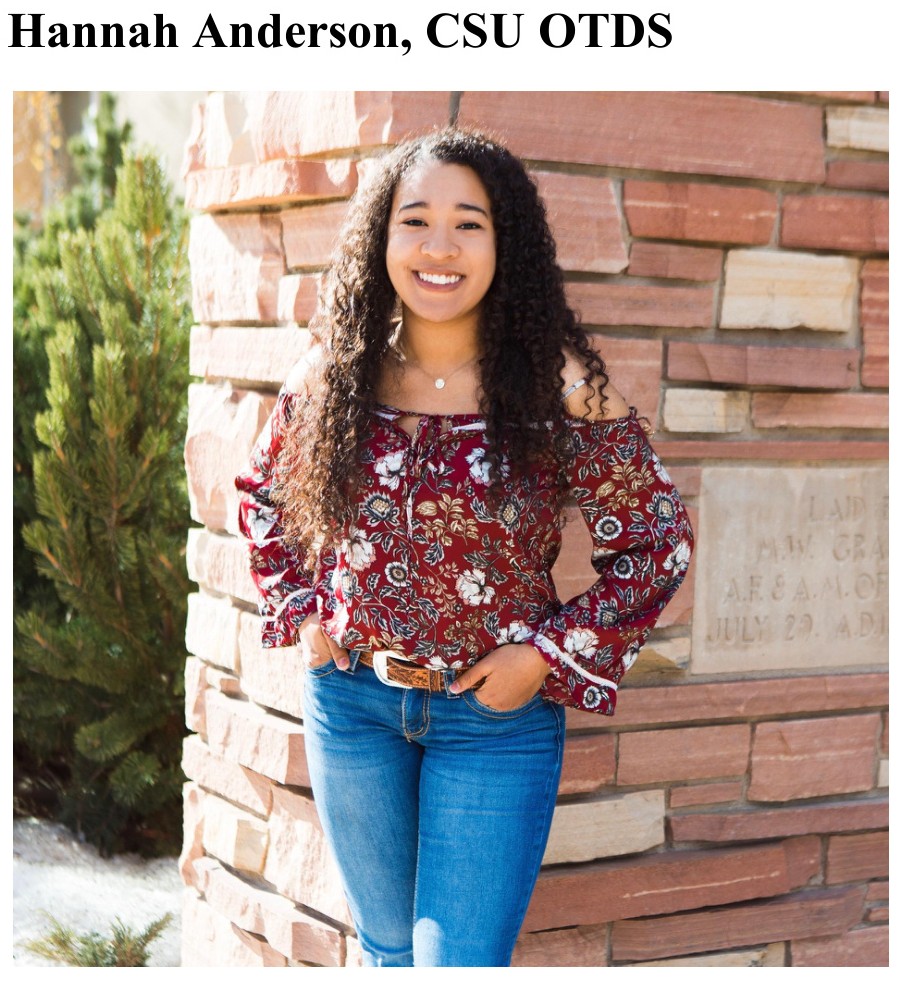
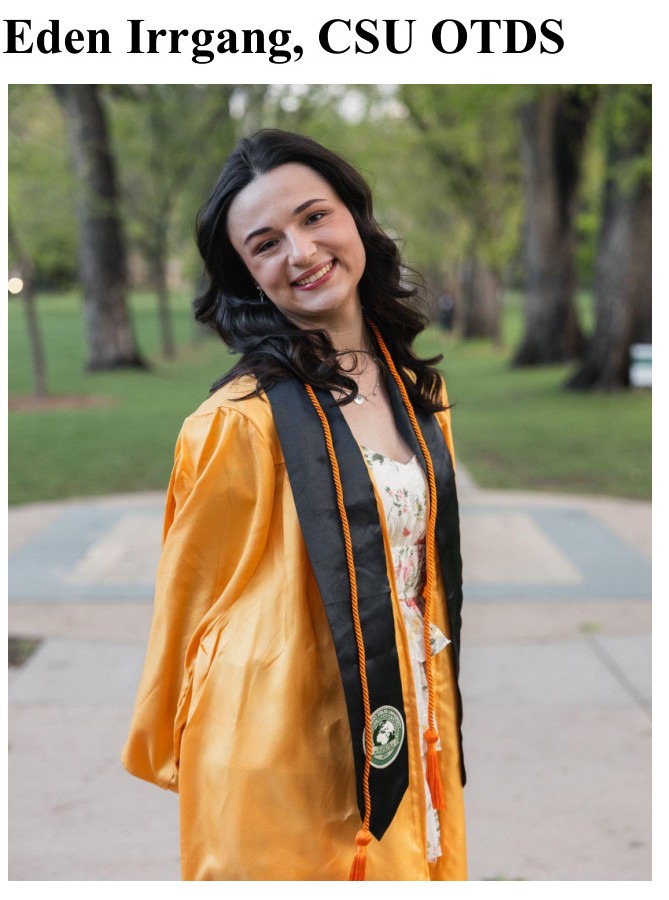
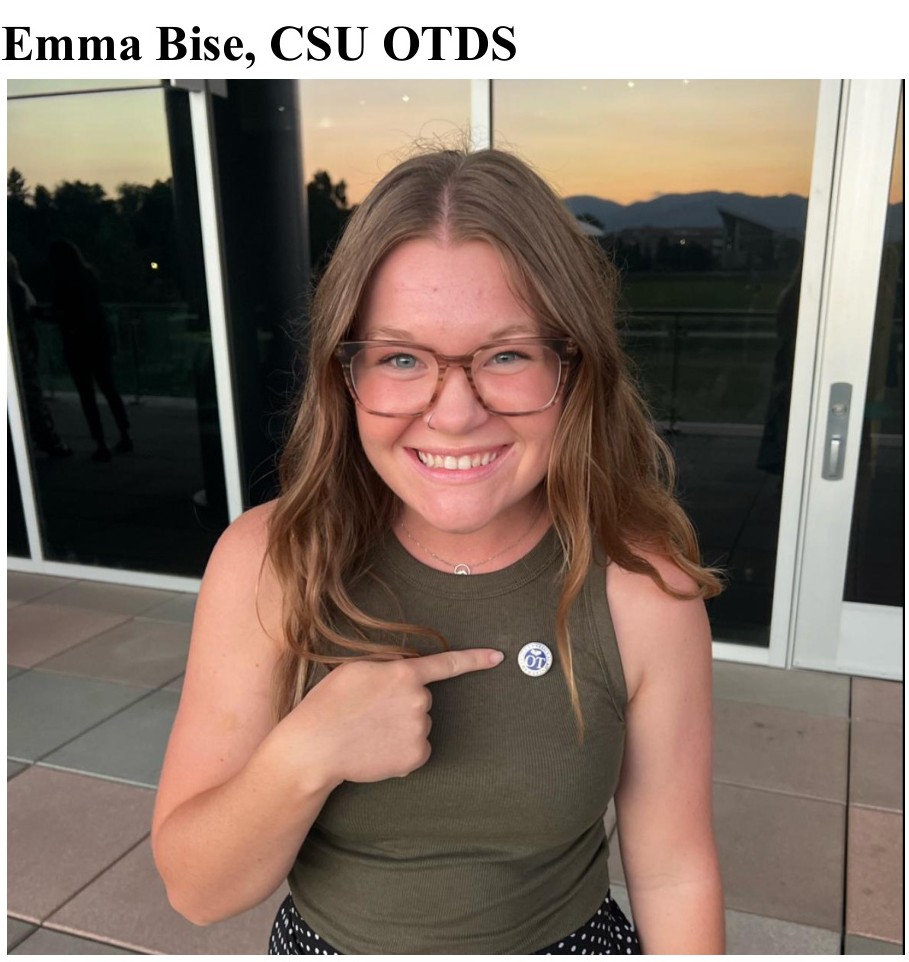 Team: Hannah Anderson (Colorado State University)*; Eden Irrgang (Colorado State University); Emma Bise (Colorado State University)
Abstract: Individuals with limited mobility in one hand, whether due to stroke, injury, arthritis, or congenital conditions, face significant challenges in performing everyday self-care tasks. Securing hair with a clip, which typically requires bimanual coordination to twist hair while manipulating the clip, becomes frustratingly difficult or impossible without assistance. This dependence on others for basic grooming can diminish dignity and autonomy. This wooden assistive device enables users to secure their hair in a clip using only one hand. The design features two hinged doors positioned to hold a hair clip in its open position, with magnets embedded in the hinges to maintain closure. The user places an open clip between the doors, then uses their functional hand to gather and
twist their hair. By positioning the twisted hair into the waiting clip and pressing their head backward against the device, the user applies sufficient force to overcome the magnetic resistance. The doors spring open, releasing the clip to close securely around the hair. The expected significance of this product lies in restoring independence for daily grooming routines. By eliminating the need for two-handed coordination or assistance from caregivers, users regain control over their personal appearance and timing. The simple, durable wooden construction requires no batteries or complex mechanisms, making it affordable and accessible. This device addresses a genuine gap in assistive technology, offering a practical solution that promotes dignity, self-sufficiency, and improved quality of life for individuals with unilateral hand function.
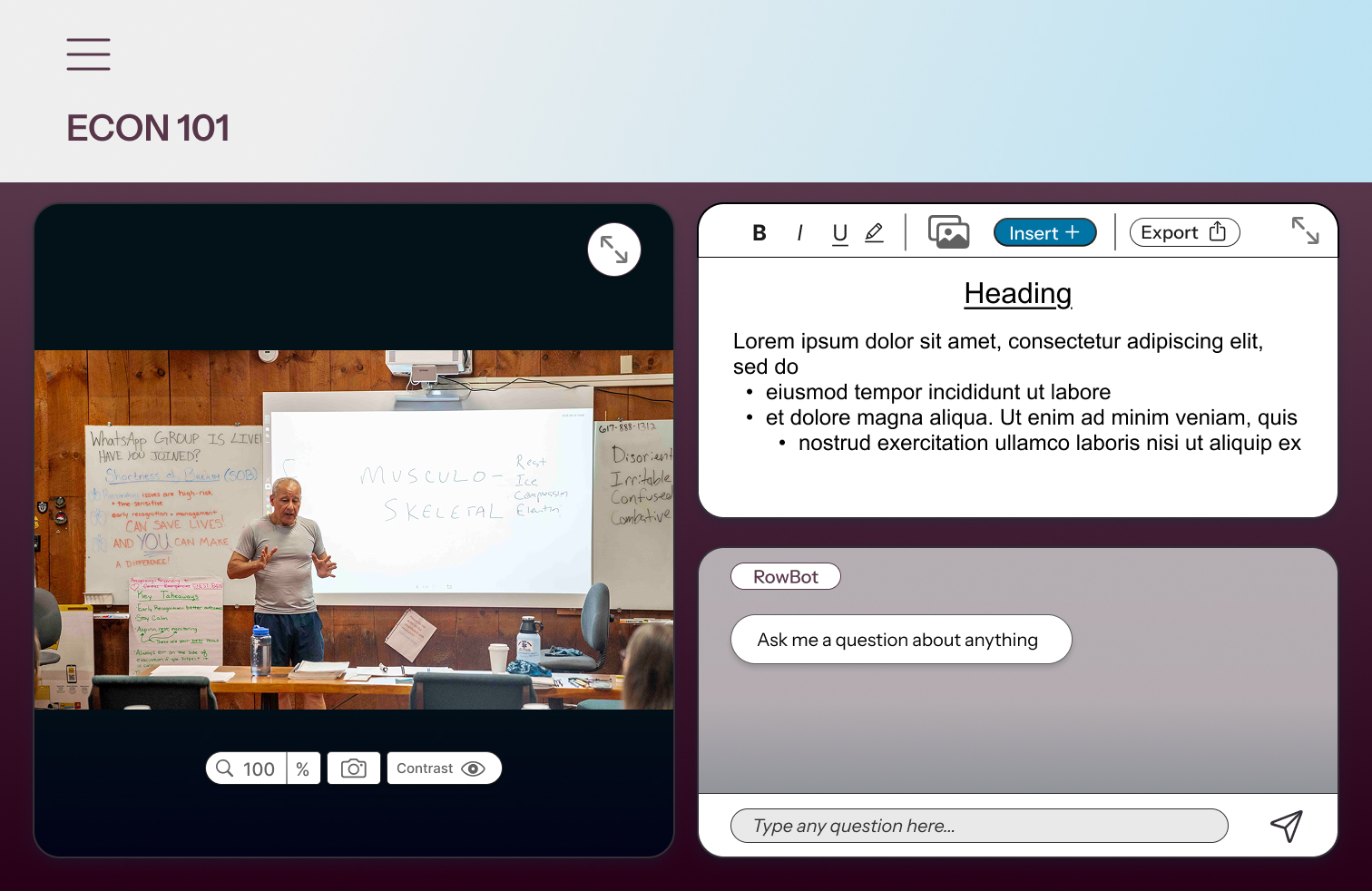
FrontRow: real-time note-taking platform that provides an equal access to learning for all students
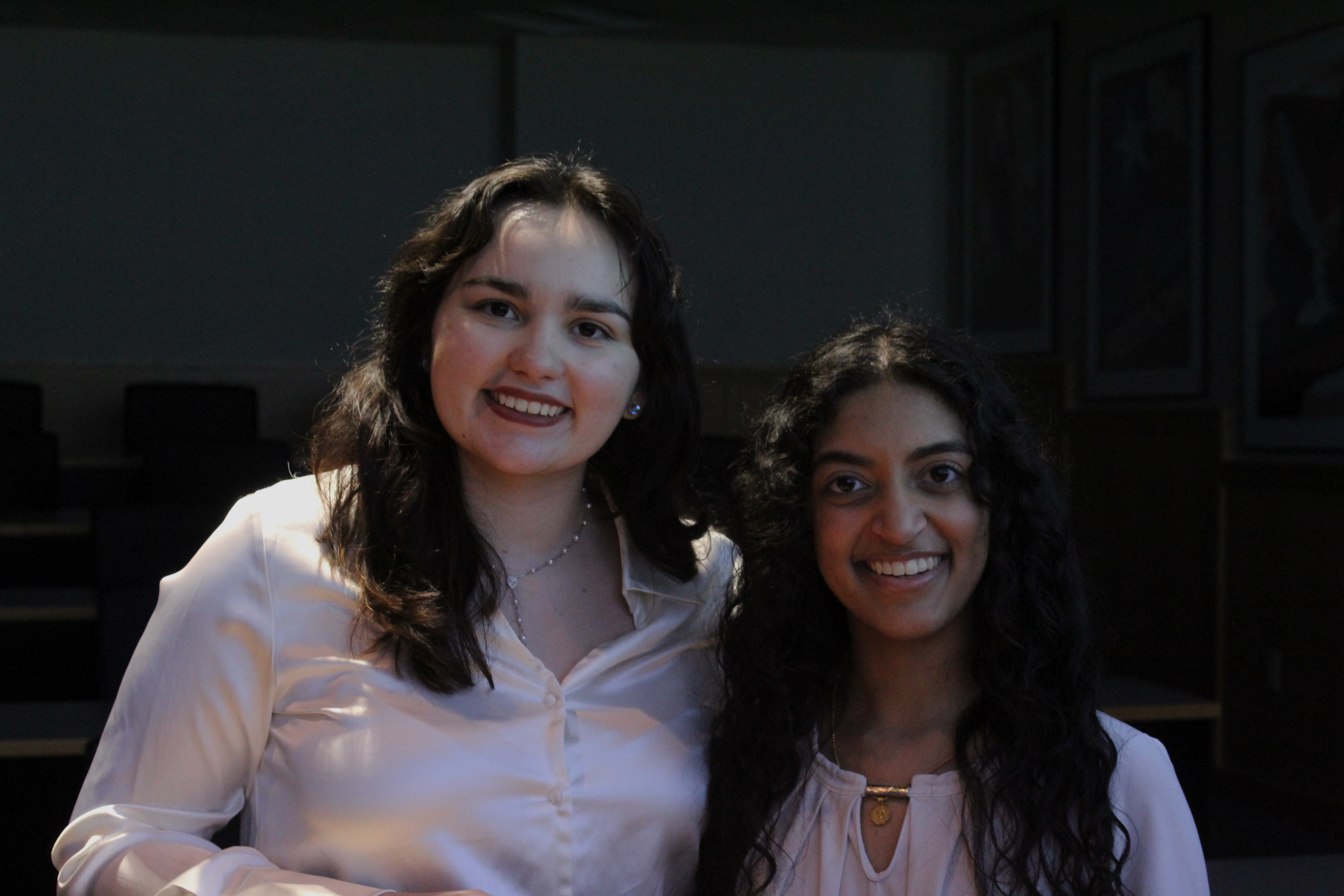
Team: Avery Neale (University of Texas at Austin); Aarushi Lakhi (University of Texas at Austin); Aubin Miles (University of Texas at Austin)
Abstract: FrontRow is a real-time, software-as-a-service platform designed to eliminate visual access barriers in classrooms, meetings, and training environments. For many students, particularly those with visual impairments, academic success depends on physical proximity to the board. This challenge contributes to a graduation rate of just 15% for visually impaired students and affects a much broader population, as large lecture halls often limit visibility for the majority of attendees. Developed from the lived experience of its founder, a visually impaired engineering and finance student, FrontRow transforms a student’s existing device into a personalized visual access tool. The platform connects to a classroom camera or smartphone in seconds, allowing users to view board content in real time on their own screen. Students can independently zoom, adjust contrast, annotate, and save material without disrupting the lecture or relying on delayed accommodations. Unlike traditional assistive technologies that are expensive, stigmatizing, or passive, FrontRow is hardware-agnostic, discreet, and designed for active learning. An integrated AI tutor processes live visual content to help students clarify complex formulas, diagrams, and concepts as they appear, supporting deeper engagement and retention. FrontRow has been validated through surveys of over 100 students, interviews with more than 30 users, and pilot testing with 40+ students across multiple universities. Disability offices consistently identify visual access as one of their most difficult challenges, with limited effective solutions available today. By bringing lecture content directly to students’ devices in real time, FrontRow advances educational equity, improves accessibility, and ensures that learning outcomes are not determined by where a student sits.
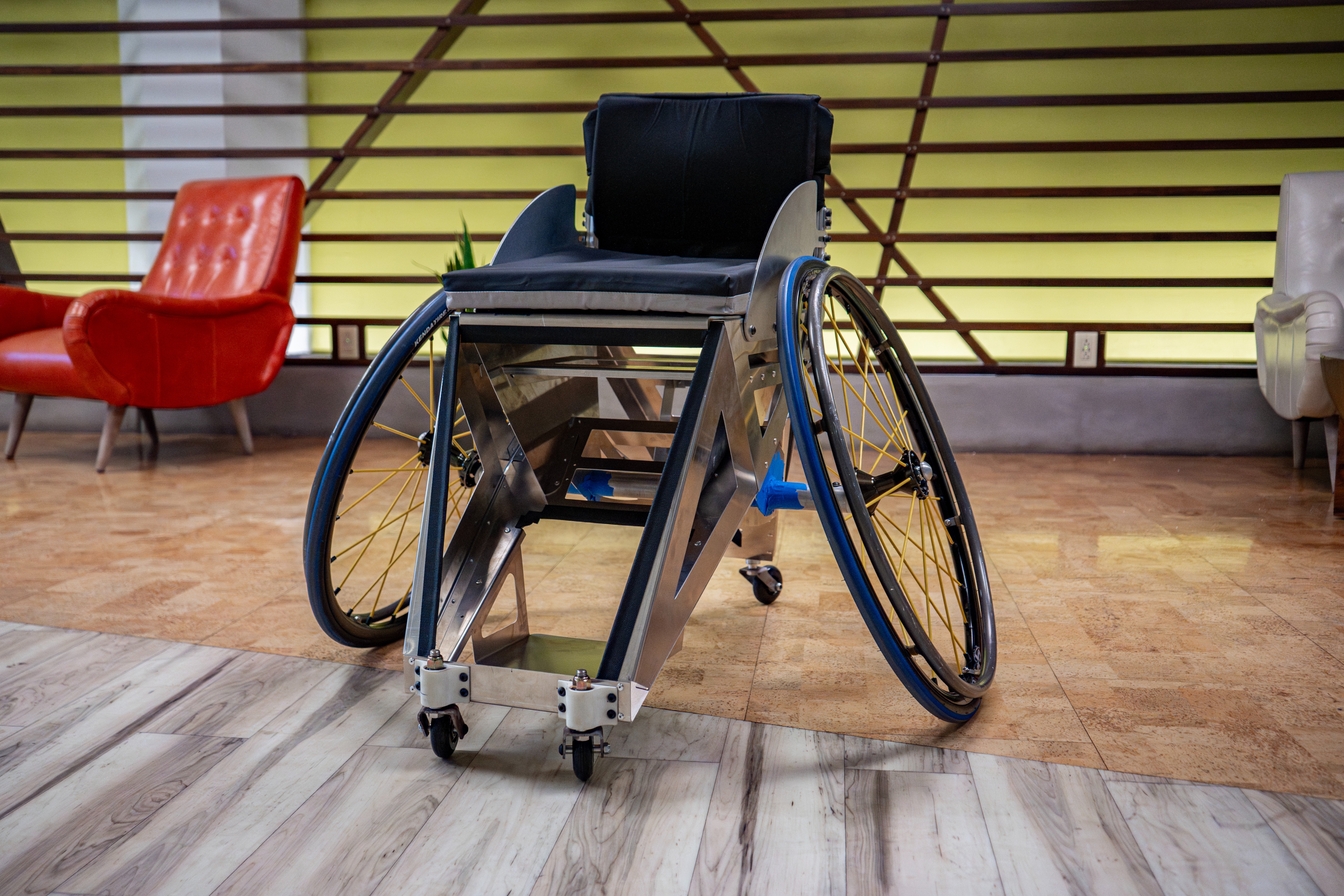
Design and Fabrication of a Kirigami-Inspired Tennis Wheelchair
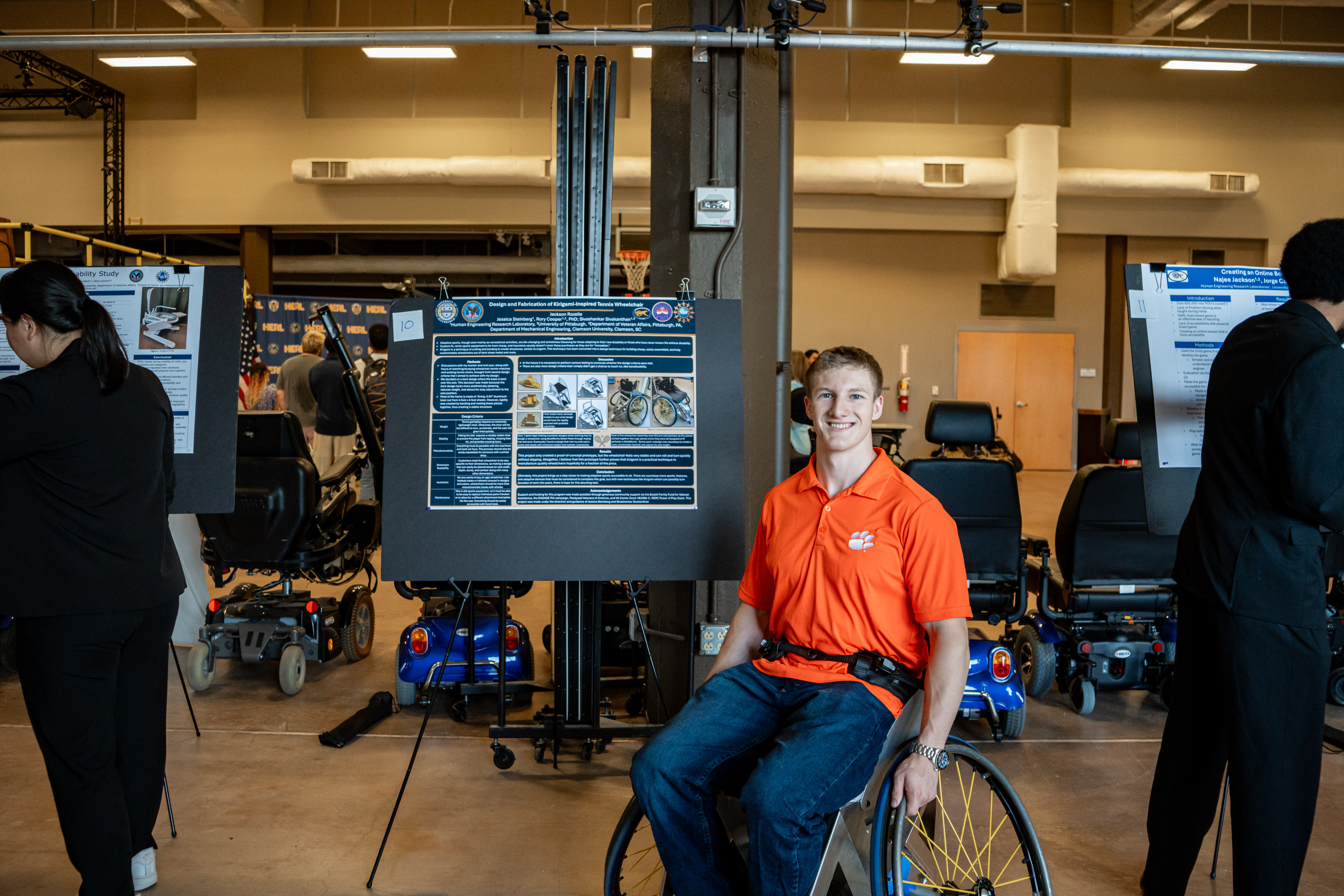
Team: Jackson Rozelle (Human Engineering Research Laboratories, Clemson University)
Abstract: A serious issue facing those interested in getting involved in adaptive sports is the cost of the necessary equipment. Insurance companies almost never cover adaptive sports wheelchairs, and for a comfortable, enjoyable experience a customized chair is essential. Most wheelchairs on the market today are made of metal tubing held together with very complex welds that require expensive manual labor to ensure proper structural integrity. This tube-only structure allows for easy customization and a lightweight frame. The challenge of my project was to keep the lightweight and customization while drastically decreasing the cost of material and labor while also decreasing manufacturing time. To do this I followed the blueprint set by my mentor who has created multiple versions of kirigami inspired wheelchairs including a heavy-duty rugby chair. Kirigami is the art of cutting and folding pieces of paper to create three-dimensional structures mainly for art, similar to origami. This project utilizes the kirigami technique with aluminum sheet metal and a machine press to create a rigid frame that can withstand use in game. The entire frame was created using SolidWorks sheet metal, so new versions can be made and customized and simply moved over to the laser cutter and brake press. The folds are held together with rivets instead of welds which makes assembly extremely easy and similar to assembling a lego set, so no experienced labor is required for the same quality frame. It has been proven over time that active, recreational hobbies can be life saving for those with disabilities, so increased access to necessary equipment could have a tremendous positive impact on the lives of people all around the world.
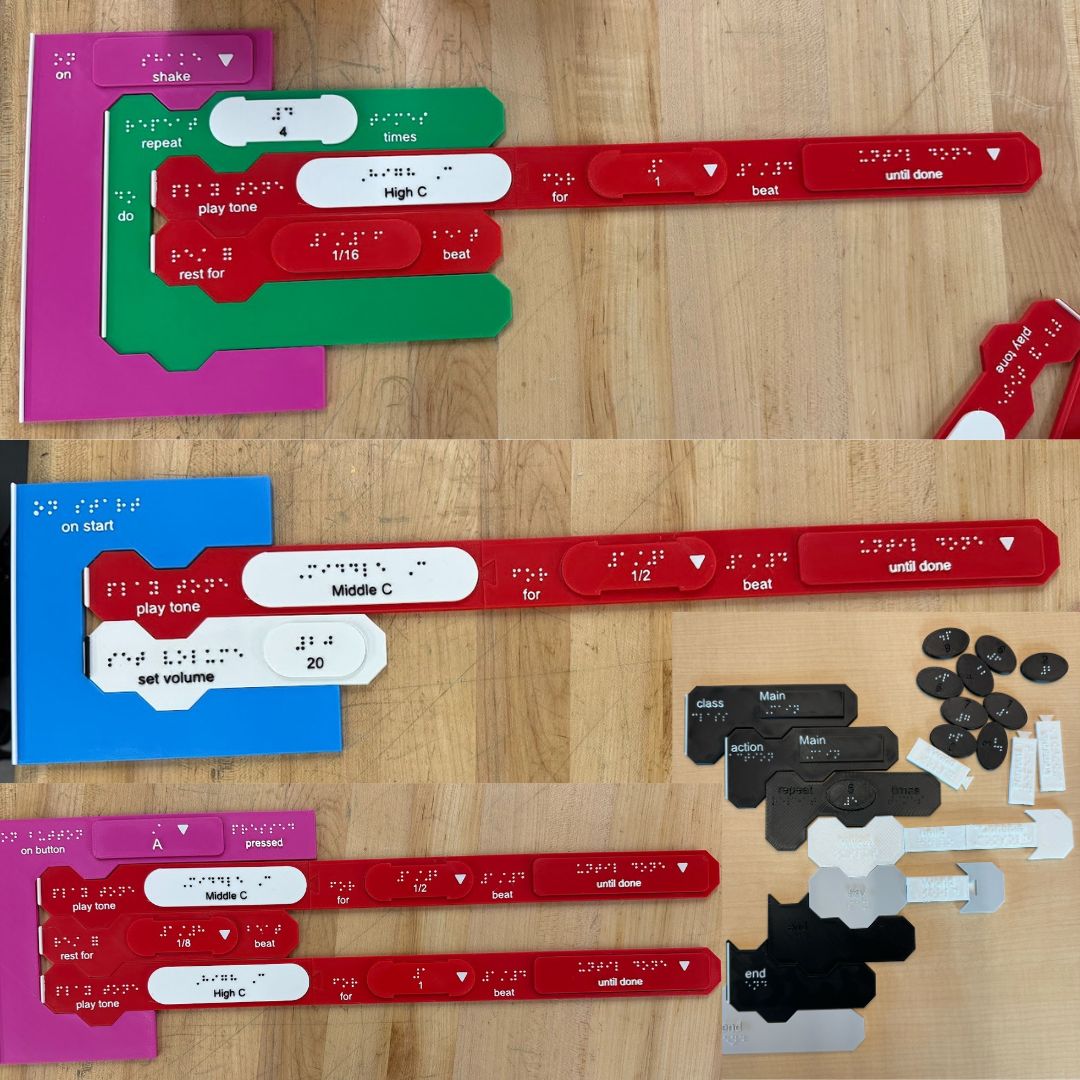
Tactile Coding Blocks: A tactile tool to help visually-impaired students learn computer science
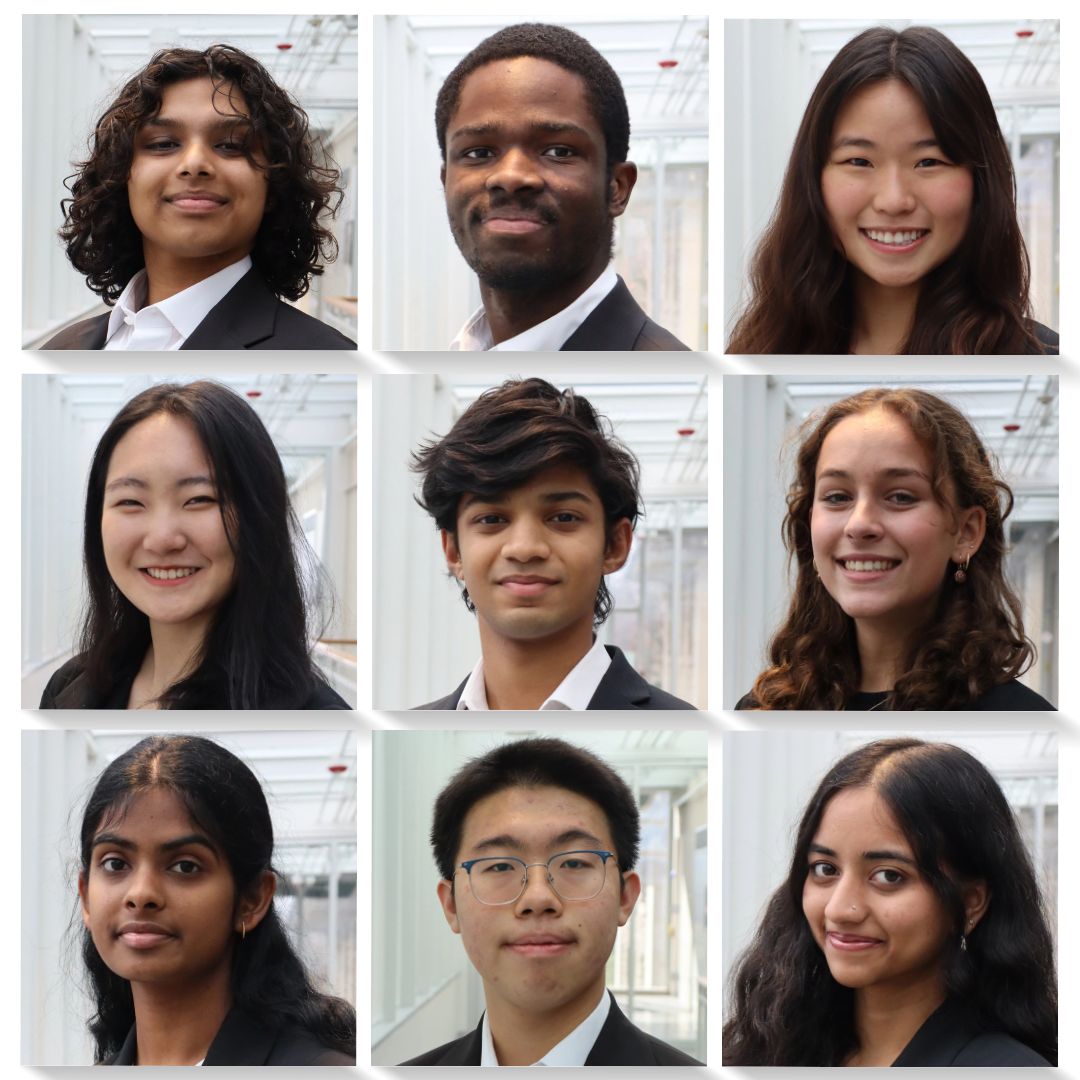
Team: Savaas Iqbal (Cornell University); Emily Wang (Cornell University); William Ellis (Cornell University); Sahana Behera(Cornell University); Andy Chen (Cornell University); Rishabh Dholakia (Cornell University); Madhu Balaji (Cornell University); Lila Alderete (Cornell University); Shannon Lin (Cornell University)
Abstract: Technical literacy has become increasingly relevant in the workforce and critical for students, but resources for those with visual impairments are severely limited in this sphere. Existing solutions can be prohibitively expensive, and limit the scope of concepts that students can access. Our team at Cornell Assistive Technologies has developed tactile coding blocks which provide a low-cost, accessible option that emulates the learner experience computer science students get with virtual coding blocks such as Scratch. Each block is embedded with grade one braille above the text, as well as contrasting colors which accommodates low vision and blind students. While the market price for such products can exceed $500, our 3D printing approach drastically reduces the manufacturing price to $15. Tactile Coding Blocks has received widespread positive feedback from teachers and students alike. Teachers with blind students can take advantage of our block auto generation software, which creates unique CAD designs with corresponding braille patterns. This software, coupled with our modular design,
simplifies the design and printing process for users, so teachers can customize unique lessons for their students and students can also design their own projects. Our blocks have been tested internationally by blind users, and have been met with positive feedback from both students and educators.
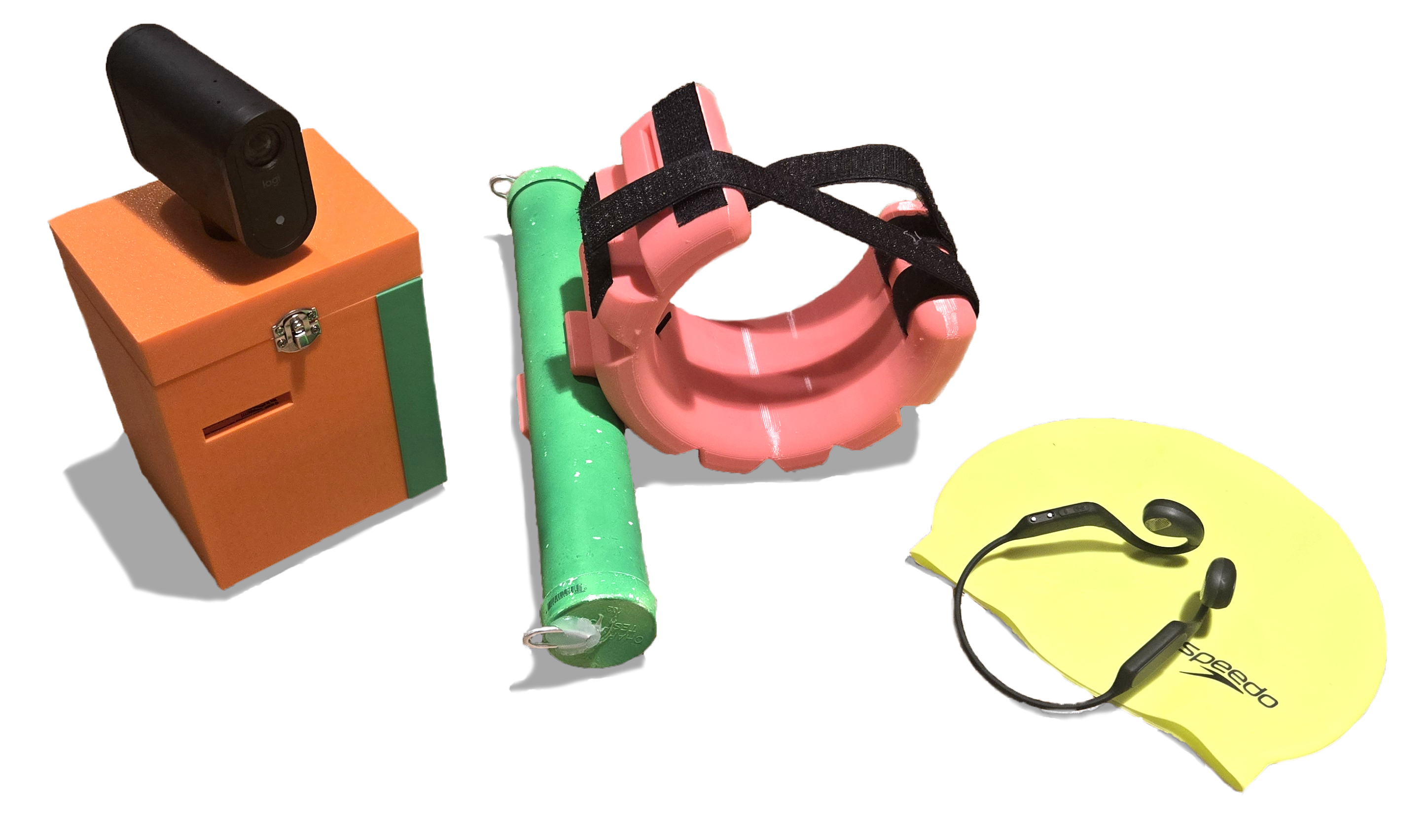
Nav-Cap: An assistive system that promotes independence for swimmers with visual impairments.
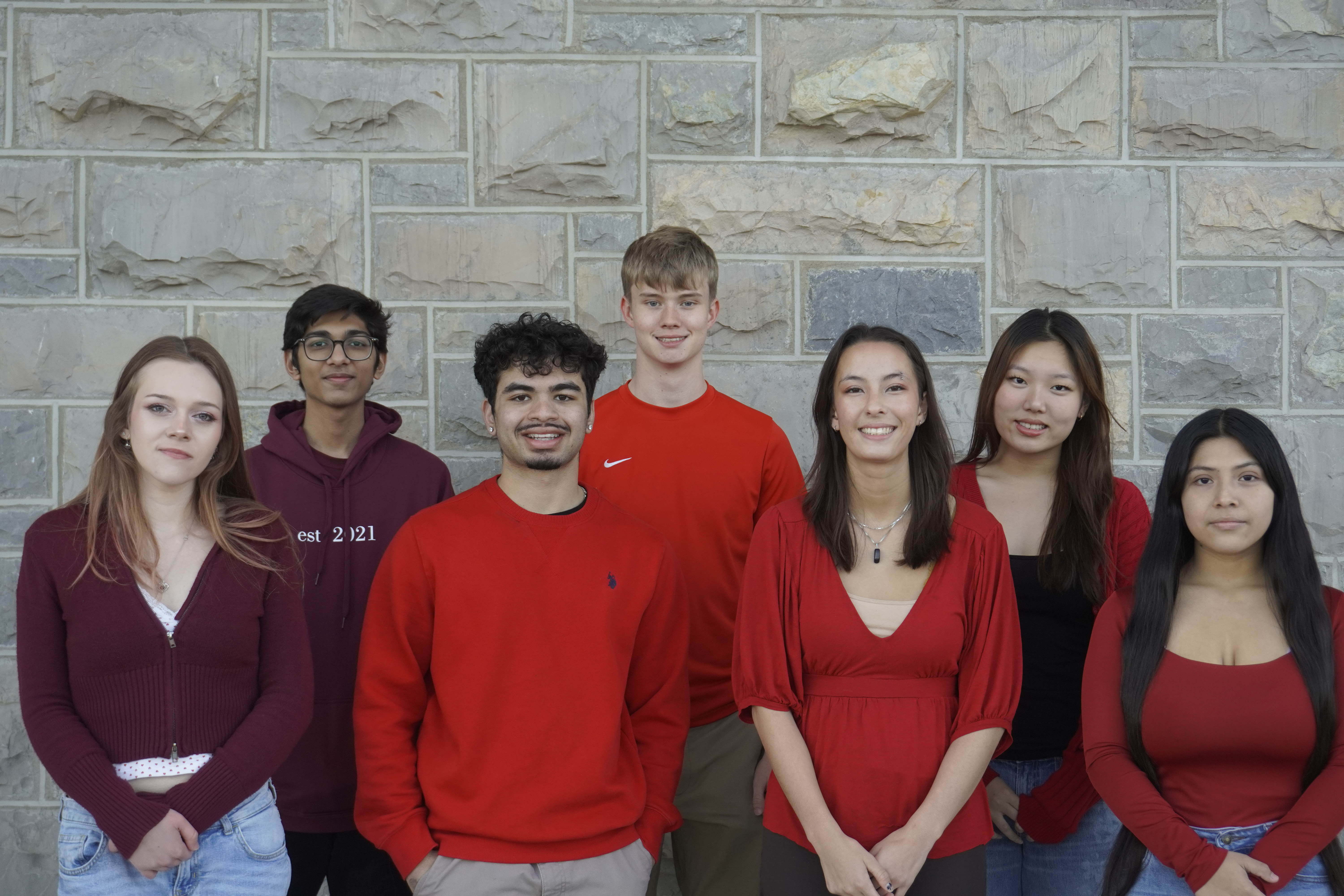
Team: Sabina Borjes; Will Draper (Virginia Tech); Ansh Khatiwada (Virginia Tech); Prehaan Parikh (Virginia Tech); Abby Sobal (Virginia Tech); Avril Yelland (Virginia Tech); Madison Kim (Virginia Tech)
Abstract: Swimmers who are visually impaired currently have no options for training independently. Other similar products available to the general public are unreasonably priced and rely on the assistance of a sighted individual. There is a clear need for an accessible and affordable system that allows swimmers who are visually impaired to train independently, without the reliance on others. The Nav-Cap system presents an assistive technological solution that promotes safety and empowerment, allowing greater autonomy for swimmers who are visually impaired. The system uses a camera with color-based detection to determine when a swimmer is nearing the end of the pool and provides an auditory cue. This system is designed to be adjusted to different swimmers and pool designs. Emphasis was placed on independence, affordability, and non-intrusiveness. The significance of this device lies in its potential to standardize lane-end signaling for swimmers with visual impairments, improving safety, individuality, and consistency. By reducing reliance on external support, the design promotes swimmer independence and dignity while supporting inclusive participation in swimming. Those with visual impairments should not be restricted or limited in the pursuit of a hobby, highlighting the need for the Nav-Cap system.
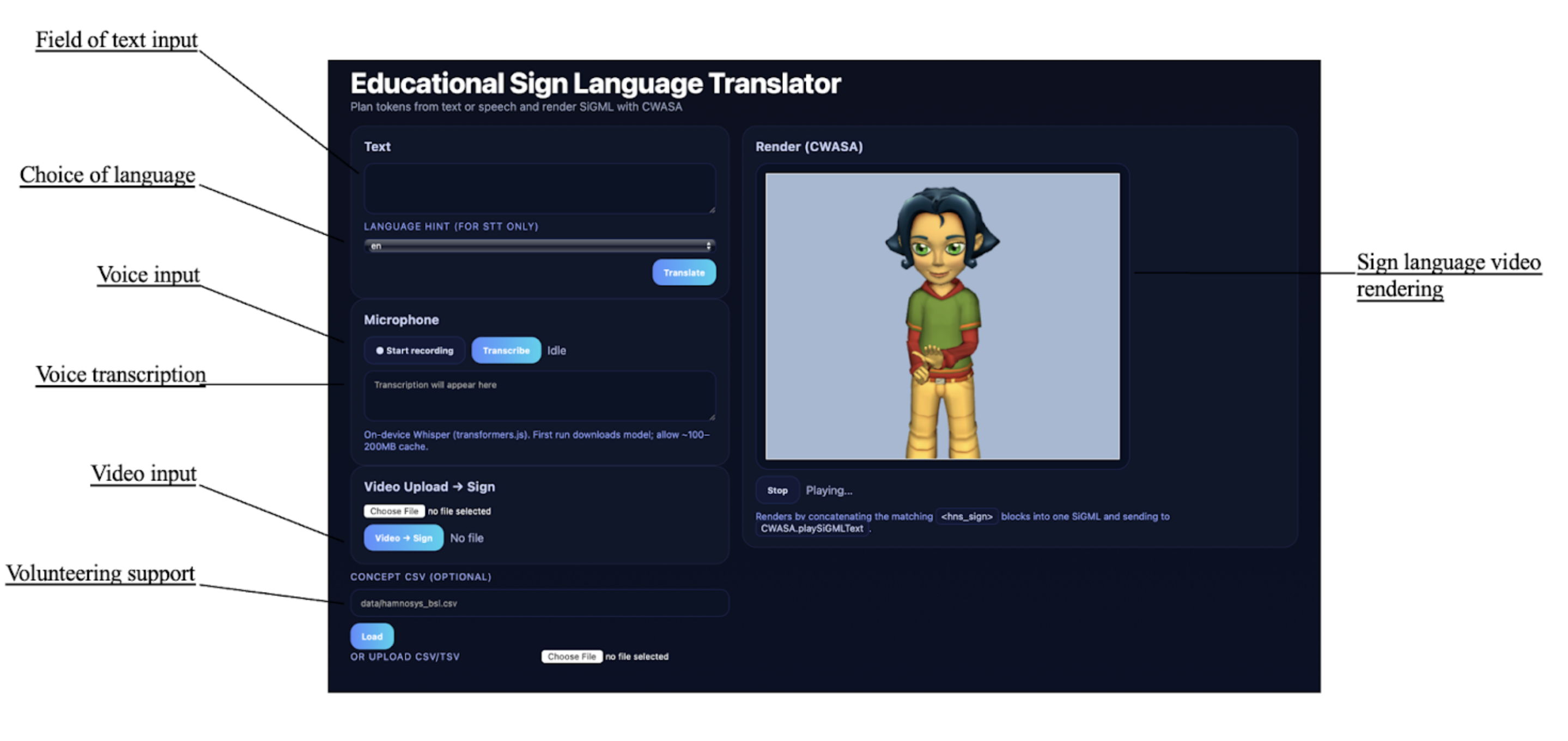
Kozha: Real-time text-to-sign-language translation for inclusive classrooms
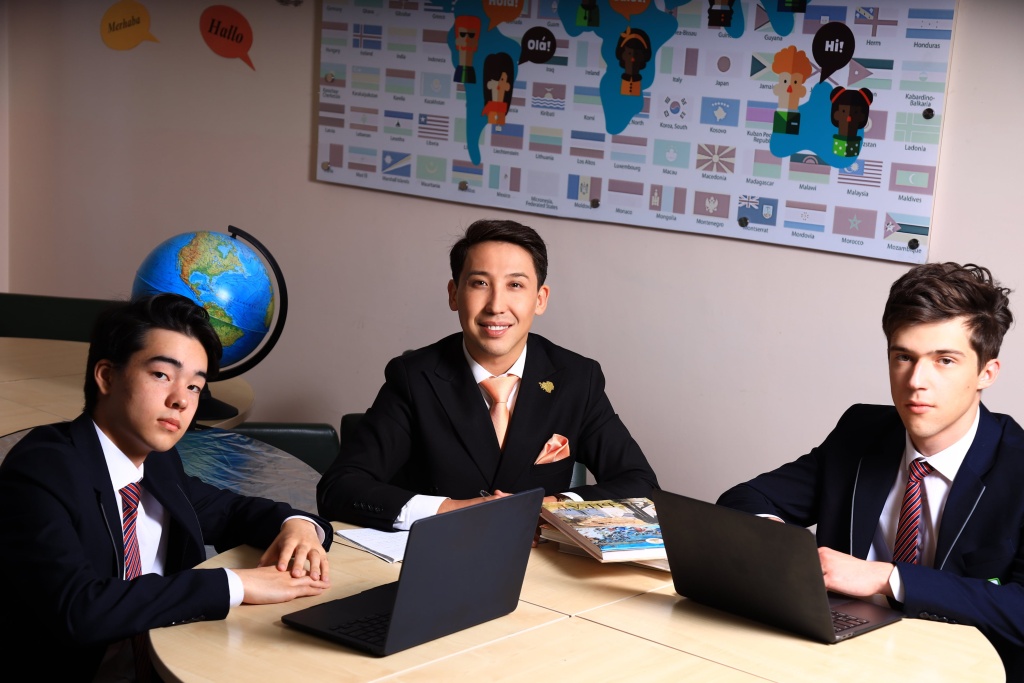
Team: Bogdan Mironov (Berea College); Zhan Amankeldy (Berea College)
Abstract: Hearing loss affects over 5% of the world's population - around 430 million people - and is projected to reach 700 million by 2050. Worldwide, inclusive education remains significantly limited: an estimated 80% of children with disabling hearing loss have no education at all. How can we establish barrier-free communication for communities of people who are Deaf or hard of hearing in inclusive schools, supporting their integration into the school community and ensuring access to quality education? We present "Kozha" - an innovative utility model designed to help students with hearing loss receive academic knowledge in the classroom on an equal basis with their peers. Unlike existing sign language resources that function mainly as word-based dictionaries (e.g., lifeprint.com), "Kozha" is positioned as a tool for augmenting and translating entire class materials into sign language. The program converts printed text, video input, or speech into sign language: speech is transcribed via on-device Whisper ASR, then processed through a token planning pipeline built on spaCy NLP that extracts meaningful tokens-pronouns, verb lemmas, and key nouns-while filtering stopwords and expanding STEM abbreviations. The system assembles sequential avatar video clips for each token to produce a final sign-language video. Our database currently contains over 1,000 British Sign Language signs with a complete fingerspelling alphabet for out-of-vocabulary words. The significance of "Kozha" is in creating a practical communication tool that strengthens integration, reduces social barriers in school settings, and promotes barrier-free education. Future work aims to implement back translation from sign language to text and expand coverage to additional sign languages.